.svg)



.jpg)


You Can't Scale Chaos: What Two Rooms of High Performers Taught Me About Business Design
Date published:
June 8, 2026
I just got back from two cities in five days, and I came home with the same observation from both of them.
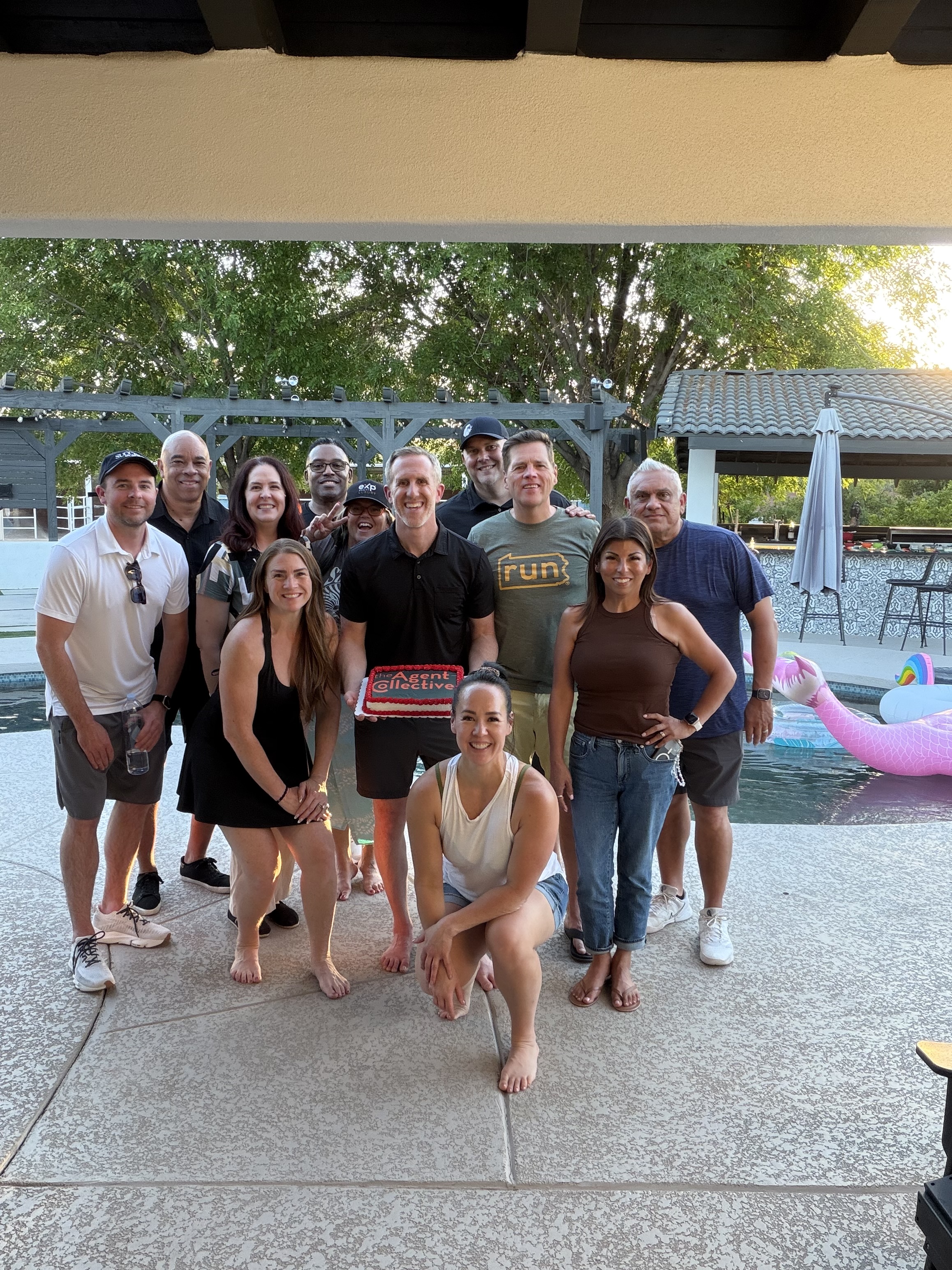
Scottsdale first. Four days surrounded by some of the best producers in the country, top 1% by volume, people running significant teams, agents who have been in the game long enough to know what works and what doesn't. It was the kind of room where collaboration is the default and everyone is genuinely invested in each other's growth. The kind of room I make a point of putting myself in.
Then straight to Omaha, where I was asked to speak to a group of entrepreneurs about systems. Business owners across completely different industries, different models, different markets. No overlap with the Scottsdale crowd in terms of what they sell or how they sell it.
Same exact problem in both rooms.
The Thing Nobody Wants to Say Out Loud
Every single person, regardless of how polished the front end of their business looked, had a backend held together with memory and good intentions. No real operational structure. No system that ran without them standing in the middle of it. Just a high-performing person carrying more than any person should have to carry, and calling it business ownership.
I've seen this enough now that I've stopped being surprised by it. But I haven't stopped thinking it's worth talking about.
Here's what I keep coming back to: you can be incredibly good at what you do and still be completely capped by how your business is built. Volume doesn't fix the problem. Revenue doesn't fix the problem. Hiring another person into a chaotic operation just means more people experiencing the chaos.
The ceiling isn't your skill. It's your structure.
What Scaling Actually Requires
There's a version of this conversation that stops at "you need systems." And that's true, as far as it goes. But it doesn't go far enough.
You can't scale chaos. That much is obvious once you've lived it. But here's the part that gets left out: you also can't scale a system without leadership. A system is only as functional as the person or team running it. If the people inside the system don't understand it, don't trust it, and don't feel equipped to use it, the system becomes a very expensive binder that nobody opens.
Leadership capacity is the real ceiling. Systems are the structure that leadership fills.
I built the CEO Listing System over about three and a half years. Every stage of the listing process, every client touchpoint, every handoff, every follow-up. Documented, systematized, and no longer dependent on me holding it all in my head. But the system only works because I also built the leadership layer around it. The clarity about who owns what. The confidence to let the process run. The discipline to stay out of it when it's working.
Today I work somewhere between 5 and 10 hours a week in my real estate business. I've closed 7 deals this year. No open houses. No grinding. The system runs. I don't have to.
The Moment I Knew Something Had to Change
I wasn't always here.
There was a stretch where I was managing around ten listings simultaneously and running all of it on memory. Every client at a different stage. Every follow-up living in my head somewhere between all the other things I was trying to hold.
I found out how well that was working when I went to order a sign removal on a listing that had already closed. The sign company had already been out. They just didn't use a removal crew. They used a chainsaw. I had been paying rental fees on that sign for three months after closing without realizing it.
That's what operating at capacity actually looks like. Not burned out and complaining. Just quietly dropping balls because there is genuinely too much to hold. The people in my business were not going to fall through the cracks. That was non-negotiable for me. But the way I was operating made it inevitable.
Memory is not a system. It's just the thing you use until you build one.
What I Saw in Both Rooms
The agents in Scottsdale and the entrepreneurs in Omaha were not struggling because they lacked skill or drive or work ethic. Every person in both rooms had those things in abundance. They were struggling because they had built businesses that could only run as long as they personally held every piece of it together.
That is an exhausting way to operate. And it has a ceiling.
The conversation I kept having, in both cities, was about what it actually takes to remove yourself as the bottleneck in your own business. To build something that runs because the structure is right, not because you're working hard enough to compensate for the structure being wrong.
That conversation is worth having more publicly. Which is why I'm bringing it to a bigger room.
Where I'm Taking This Next
On June 16th I'm speaking at The Lead Flow Summit, a free one-day virtual event for real estate agents who are ready to stop running their business on memory and hustle and start building something that holds.
I'll be walking through the CEO Listing System specifically: what it is, how it's structured, and what changes when your business is designed to run without you in the middle of every single thing. I'm on at 3:05 PM EDT.
The full day is built as a complete arc, from understanding what's broken in the current approach to having a clear picture of what a different business looks like and how to build it. Ten speakers. Free to attend live.
If any of this resonates, this is the next conversation.
Register for The Lead Flow Summit here.
.jpg)
.jpg)

.jpg)
%20(1).jpg)