.svg)



.jpg)


4 Sales Questions So Good Prospects Will Close Themselves
Date published:
June 12, 2026
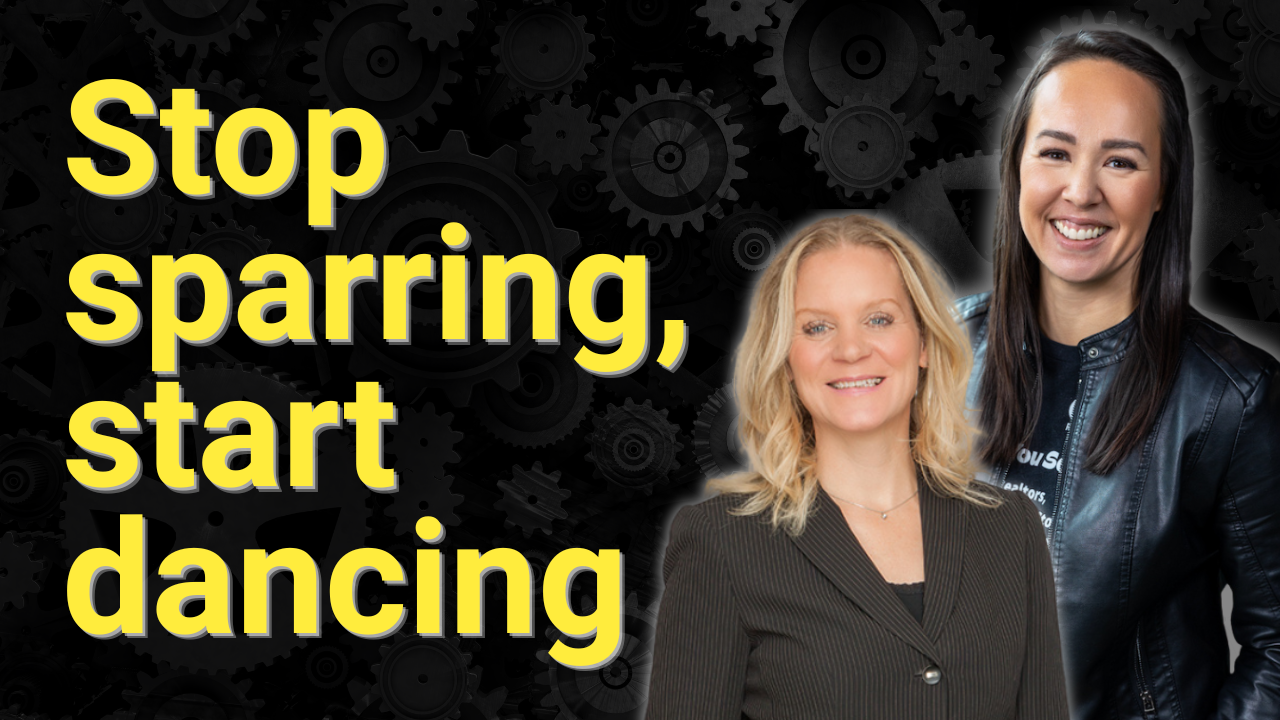
Stop Sparring With Your Prospects — And Start Dancing
The question-based sales and recruiting framework that closes more business, builds deeper trust, and finally gets you off the income roller coaster.
I brought Amy Donaldson onto The Systems-Driven CEO because I knew she was going to challenge some things. She did not disappoint.
Amy is a sales and leadership coach with Southwestern Consulting who has spent 30 years in the top 10% of sales professionals across multiple industries. She's the author of Get Off the Cash Flow Roller Coaster! and has coached individuals and teams all over the country on recruiting, sales, and leadership. She also, as it turns out, has a black belt in Tae Kwon Do — which makes the framework she shared in this episode even more fitting.
Because Amy talks about the difference between sparring and dancing. And once you hear it, you will never handle an objection the same way again.
The Objection Isn't Your Roadblock — It's Your Icebreaker
One of the first things Amy said that stopped me cold was this: every market has a "buzzword objection." Right now, for a lot of people, it's interest rates. But it's always something — iBuyers, market slowdowns, recessions, "we'll wait and see." There's always a sentence that prospects are saying, and most salespeople hear it as a wall.
Amy treats it as a door.
"That's your icebreaker," she said. "That's where the conversation starts."
The problem isn't the objection itself. It's what most people do with it. They pull out their arguments. They show the math. They explain, defend, and persuade — and what they're actually doing is sparring.
Sparring is when you meet someone's concern with logic and try to win the point. You might win the argument. You will almost certainly lose the business.
Dancing is different. Dancing is when you show genuine interest, ask a question, let them answer, and ask another question. You're not trying to counter them — you're leading them, gently, toward clarity. And here's the thing: most prospects, when asked the right questions, arrive at the right conclusion on their own. They don't need to be convinced. They need to be heard and guided.
That shift alone — from "let me tell you why you're wrong" to "tell me more about that" — is worth more than any objection script ever written.
The Dance in Practice: First-Time Buyers and the Rent Math
Amy walked through a specific example that I think every CEO and sales professional needs to hear.
A first-time homebuyer says they're waiting for interest rates to come down. Most agents nod and move on, or launch into a market explanation that goes over the buyer's head. Amy does neither.
She asks questions.
What are you currently paying for rent? How long has that been going on? So at $2,000 a month — what's that come to in a year? And how many years has that been?
She doesn't tell them. She makes them do the math. And when a buyer realizes they've spent $120,000 in rent over five years — money that built zero equity and is completely gone — they don't need Amy to tell them what to do next. They feel it.
"You want to get them to see it themselves," she explained. "When you tell them, it's information. When they arrive there, it's a decision."
That's the dance. And it works in every industry, every context, every conversation where someone is sitting on the fence.
What Actually Sets You Apart (Hint: It's Not Your Pitch)
We talked a lot in this episode about differentiation — specifically, the question every salesperson dreads: What makes you different from everyone else?
Amy's answer surprised me. She doesn't spend any time on it.
"Nobody's ever asked me that in a real consultation," she said. "And the reason why is that if I'm asking really good questions, the person I'm with has a feeling — they know. They trust me. They don't need me to explain what makes me different."
The biggest differentiator, she said, is simply being the one in the room. Being present, asking good questions, and creating a conversation where the other person feels genuinely heard. That's it.
She told a story about cold-calling a commercial real estate manager to pitch a sales training. The manager pushed back: Why would I bring someone in that I've never heard of? Amy's response? She pointed out that she had kept him on the phone for 18 minutes, asked good questions, presented her value, made her ask, handled his objection, and had him still smiling and still engaged.
If I teach your team nothing else, she told him, but just what I just did — what would that do for their business?
He booked her. Of course he did.
The demonstration is the pitch. The conversation is the credential. When you stop trying to explain your value and start showing it through the quality of your questions, your differentiation takes care of itself.
The Recruiting Playbook Nobody Is Using
Partway through our conversation, Amy shared a recruiting strategy so simple it almost sounds too easy — and it's been one of the most valuable things I've heard on this podcast.
Open houses.
Not as a place to find buyers. As a place to find agents.
Amy's approach: walk into an open house, let the agent know you're also in the industry (so they're not holding their breath for a sale), look around so you can genuinely compliment the listing, and then get curious. How do you like it over at XYZ company? What do you love about it? What do you wish were different?
You're not recruiting. You're just asking questions. And here's what Amy knows that most people don't: if something is happening at that brokerage — a managing broker leaving, office drama, a culture shift — you're going to hear about it before it's public knowledge. Before everyone else is scrambling to make calls, you're already having coffee with the right people.
"You go where all the people are," she said, "but you only need to talk to one."
And when they're unhappy? It unfolds naturally. You ask a few more questions. You pivot to hey, would you ever want to grab coffee? You set the appointment. You leave. They never feel recruited. Because they weren't — not in the way they'd recognize it. They just had a really good conversation with someone who was genuinely interested in them.
That's recruiting done right.
The Biggest Myth in Sales: That You Have to Be an Extrovert
I loved this part of our conversation, because Amy flipped something most people assume is true.
The myth is that sales is a game for extroverts — people who love talking, who thrive in rooms full of strangers, who can charm anyone in seconds. Amy has spent decades watching that play out, and here's what she actually sees:
Extroverts who haven't been trained tend to talk. A lot. They shake trees and things fall out. They're not sure why, but things happen. Their conversion is low, but they're talking to so many people that it doesn't matter.
Introverts who haven't been trained sit in the corner.
But introverts who have been trained? They're what Amy calls silent killers.
Because the two things you actually need to succeed in sales — reaching people consistently, and asking great questions — introverts already do one of them naturally. They listen. They're genuinely curious. They want to know about the person in front of them. They have, as Amy put it, "really big ears."
Give an introvert permission to go to a networking event and have one intentional conversation instead of working the room, and they will walk away with an appointment. Every time. Because they're not trying to impress anyone — they're genuinely trying to understand.
"One introvert having one intentional conversation at every networking meeting," Amy said, "will outperform an extrovert who's just talking to people and saying things."
The key is meeting yourself where you are. If your max is one conversation, go have one great one. Then two. Then three. You don't build the habit by overloading it — you build it by making it feel possible.
From Top Producer to True Leader
Amy's ideal coaching client is someone I see all the time in this space: the person who was the top producer, who built something impressive, and who just stepped into a leadership role — only to discover that everything that made them great at selling doesn't automatically transfer to leading.
It's a different game. Recruiting has a process, a cycle, income-producing activities that need to be calendared just like sales does. Leadership means knowing how to onboard the people you've recruited, how to lead different personality styles, how to build something big enough to hold your vision and their goals.
"Once you've recruited them, now what?" Amy asked. "They're here. How do I get them to be the best they can be?"
The mindset shift is recognizing the parallel structure: recruiting is sales, just with a different product. The process, the calendar discipline, the focus on controllable activities instead of hoping the tides bring people to you — it all applies. The leaders who figure that out are the ones who build something that lasts. The ones who wait for people to come to them end up back on the roller coaster.
The Work That Gets You Off the Roller Coaster
Everything Amy shared in this episode — the question frameworks, the open-house recruiting strategy, the introvert playbook, the leadership mindset — comes back to one thing: controllables.
The income roller coaster exists because people build their business around things they can't control. Market conditions. Interest rates. Who happens to reach out. Who happens to need to move.
What Amy teaches, and what I teach, is that there's a better way. You build around the activities you can control — the conversations you initiate, the questions you ask, the appointments you set, the relationships you tend. You stop waiting for the tide to bring you business and start going to where the people are.
That's how you get off the roller coaster.
That's how you become the CEO of your business — not just a participant in it.
Connect with Amy Donaldson
- Instagram: @amy_donaldson
- Website: southwesternconsulting.com/coaches/amy-donaldson
Ready to stop reacting to the market and start running your business with intention? Let's talk. Book a strategy call at https://bit.ly/StrategizeWithLynea
.jpg)
.jpg)

.jpg)
%20(1).jpg)